India's mango pulp export market has thousands of suppliers, ranging from certified processing units with real aseptic infrastructure to traders repackaging inconsistent, sometimes diluted product. For a buyer placing a first bulk order, the quality and authenticity checks below are the difference between a reliable long-term supplier and a costly mistake.
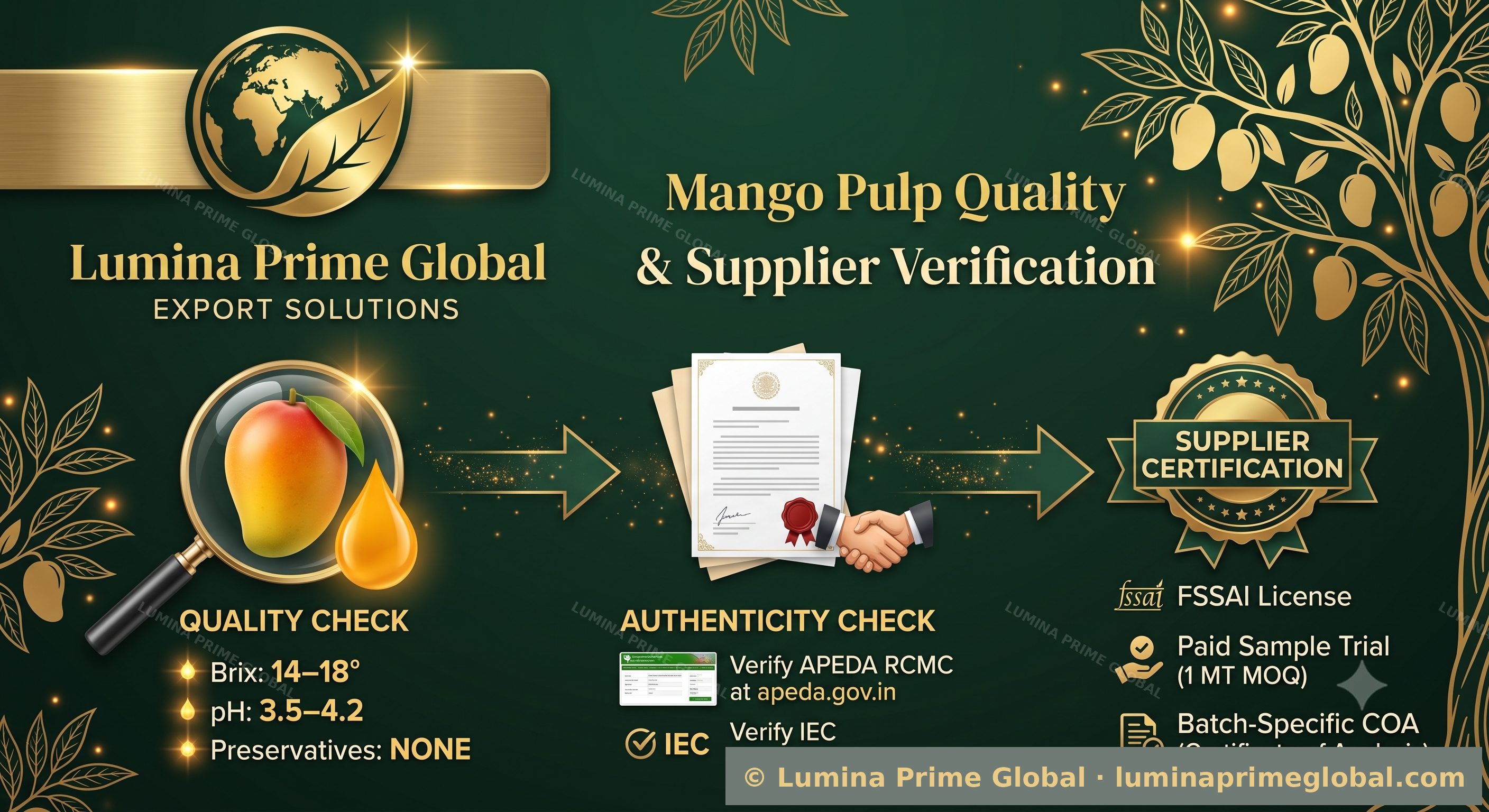
Genuine Brix range: 14–18° · pH: 3.5–4.2 · Preservatives: None (aseptic) · Verify APEDA RCMC at: apeda.gov.in · Always request: COA + sealed sample
1. Quality Parameters That Actually Matter
Not every number on a specification sheet is equally important. These are the parameters that reliably indicate genuine, properly processed mango pulp:
| Parameter | Genuine Standard Grade | Red Flag |
|---|---|---|
| Brix (natural sugar) | 14–16° (Totapuri) / 16–18° (Alphonso) | Below 12° or inconsistent between batches |
| pH | 3.5–4.2 | Outside this range without explanation |
| Preservatives | None (aseptic process) | Sorbates, benzoates, or sulphites listed |
| Added sugar | None | Sucrose or glucose syrup on the spec sheet |
| Colour | Natural golden-orange, consistent lot to lot | Artificial colour additives listed |
| Heavy metals / pesticide residue | Within FSSAI / Codex / destination MRLs | No lab report offered, or report is generic/undated |
2. Spotting Diluted or Artificial Product
The most common quality issue buyers encounter isn't outright fraud — it's dilution or inconsistency from suppliers cutting corners to hit a lower price point. A few practical checks:
- Compare the quoted Brix against the variety claimed — Totapuri consistently below 14° suggests dilution with water or lower-grade fruit
- Ask for the batch-specific Certificate of Analysis, not a generic template document reused across orders
- Request a sealed 2–5 kg sample before committing to volume, and test or taste it yourself rather than relying solely on paperwork
- Check the ingredient declaration — genuine aseptic mango pulp should list only "mango" with no additives
- Be cautious of pricing significantly below the market range for the stated variety and Brix — quality corners are the most common explanation
3. Verifying the Supplier Itself
Quality on paper means little if the exporter isn't who they claim to be. Before placing a commercial order, verify:
- APEDA RCMC number — confirm directly on apeda.gov.in; this registration is required for any legitimate agri-export from India
- IEC (Import Export Code) — verifiable through DGFT; every genuine exporter has one
- FSSAI license — confirm it's current, as licenses require annual renewal
- Processing facility evidence — request photos or a video walkthrough; aseptic processing requires significant capital equipment that a genuine processor will be happy to show
- Shipping history — ask for redacted Bill of Lading copies from previous shipments as evidence of an established export track record
Any exporter unwilling to provide a paid sample, a batch-specific COA, or basic facility evidence before a bulk order is a signal to keep looking — legitimate processors expect this level of diligence from serious buyers and won't treat it as an inconvenience.
4. Documentation That Should Come With Every Shipment
- Certificate of Analysis (COA) — batch-specific Brix, pH, heavy metals, pesticide residue
- Certificate of Origin (COO) — from APEDA or Chamber of Commerce
- Phytosanitary Certificate — from India's Plant Quarantine authority
- FSSAI Compliance Certificate
- Commercial Invoice & Packing List — with lot numbers matching the COA
5. Frequently Asked Questions
6. Next Steps
- Request a batch-specific COA alongside any quote
- Verify APEDA RCMC and IEC independently before committing volume
- Order a sealed sample and test it before your first bulk purchase
- Confirm documentation matches lot numbers on arrival
Lumina Prime Global is an APEDA RCMC-certified exporter — IEC HWOPD5247R, GSTIN 37HWOPD5247R1ZJ, FSSAI licensed. Batch-specific COA with every shipment.